What is Legacy Modernization?
Overview
Applications and systems, which have been in use for an extended period of time, are beset by a host of issues - inefficient performance due to outdated technology, security vulnerabilities, limited scalability and adaptability, and high maintenance costs.
Legacy system modernization is the process of transforming outdated, inefficient, and monolithic legacy systems into modern, agile efficient and adaptable solutions. A well thought-out and structured approach to modernization of legacy systems can enhance business processes, improve customer experiences, boost growth and revenues, and keep organizations ahead of competition.
What are the different dimensions of legacy threats?
Legacy systems are no longer mere challenges or risks. They are actual threats for business growth and success due to the following reasons:
- They run the real risk of becoming rapidly obsolete, as they are built on older technologies and systems.
- Performance rapidly declines from inefficient to non-performance.
- Security vulnerabilities can succumb to sophisticated cybersecurity attacks.
- Scaling legacy systems to keep pace with growing business demands can not only be expensive, but even impossible.
- As they are built on inadequately annotated legacy code, they can create crippling silos of knowledge and talent.

Developing an effective legacy system and software modernization strategy is therefore vital for business relevance for the present and the future. It transforms monolithic and inefficient legacy systems into adaptable and future-forward solutions that enhance both business processes and stakeholder experiences.
What is the best approach to legacy modernization?
A thorough assessment of applications and systems should be done to understand existing strengths, limitations, and potential areas for improvement.
Based on the findings, organizations will need to design the appropriate legacy modernization strategy best aligned with their business goals and budgets.
A sound legacy modernization strategy will guide organizations on how microservices can be adopted, how legacy software can be encapsulated, and how modernization solutions can be introduced.
What are the 5 R’s of legacy modernization strategy?
Organizations may choose from one of the following legacy modernization approaches:
Rehost
When quick transition is the goal, legacy applications may be migrated - or ‘rehosted’- to a new environment with minimal changes to their code and functionality.
This approach focuses more on infrastructure modernization and does not provide the full potential of legacy modernization. There is also the risk and challenge of not correctly understanding the application’s source code.
Another option for quick and painless modernization is to ‘encapsulate’ the legacy applications’ data and functions through APIs and making them available as services.
Refactor
Here, the existing code is restructured with some code adaptation, and optimization without changing the core functionality. While this will improve an application’s efficiency, performance, and maintainability, it does not leverage the full advantages of modernization.
Re-platform
Here, legacy applications are moved to a different platform or infrastructure. It involves a greater extent of code adaptation, and results in greater performance improvements and scalability.
Re-architect
This is a bolder and more advantageous approach and calls for an extensive redesign of their architecture. Executed in a phased manner, it involves the simultaneous management of the processes while transforming the architecture. This ensures that legacy systems efficiently meet modern standards.
Replace
When legacy systems are hopelessly outdated, organizations may need to go in for a complete replacement approach - and while this may deliver a modern and transformed system, it carries the challenge of disruptions during the transition.
How can organizations architect legacy modernization with Cloud and AI?
A long-term cloud + AI strategy for legacy transformation will achieve true value through agility, flexibility, speed, and scale.
While the cloud provides a scalable and flexible platform for modern applications, AI and GenAI can automate and significantly accelerate the legacy transformation process.
The Cloud-AI duo thus delivers multifaceted outcomes of enhanced efficiency, lower cost, and higher security in making the organization ready for future-forward systems.
How does adopting microservices, APIs and DevOps help in legacy modernization?
- Microservices can transform monolithic core applications into a flexible, scalable, and cloud-ready architecture.
- This approach allows organizations to break down complex legacy systems into simpler independent services, which can be accessed through standardized APIs.
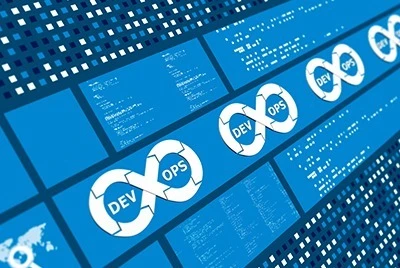
- Integrating DevOps practices and CI/CD pipelines accelerates the innovation cycle to enable faster time-to-market.
What is the Strangler Fig Pattern, and how does it enable legacy modernization?
By deploying the Strangler Fig Pattern, organizations can avoid risky confrontations with rigid monolithic systems.
With a smart architectural approach, the Strangler Fig Pattern wraps the legacy application in a new API gateway that directs specific new services to the new microservice.
In short, it takes the risk of a single point of failure in the legacy modernization process.
Of course, rigorous and continuous testing and governance are non-negotiable musts in and legacy modernization. Data cleansing and standardization must be achieved before migration. In this context, the right automated data profiling tools can identify and repair inconsistencies to preserve the integrity of both historical and transactional data.
What are the benefits of legacy modernization?
Legacy modernization and transformation provide multi-dimensional advantages, including:
- Reduced total cost of ownership (TCO), thanks to optimized use of resources.
- Higher agility and faster time-to-market.
- Improved customer and employee experiences.
- Enhanced security and compliance.
- Effortless and flexible scaling.
- Minimum downtime and data loss, and high resilience for business continuity.
- AI and GenAI-readiness for the future.
What are the challenges of legacy transformation? How can they be addressed?
Achieving successful legacy system modernization is not without its challenges. They include:
High costs and risk of downtime
Legacy modernization requires significant investment, and the cost can be daunting.
Through phased strategies based on impact on high-value, high-risk areas, businesses can achieve incremental transformation while spreading costs over time.
Plus, moving to a new system runs the risk of interruptions in business processes, which can impact productivity and customer experiences.
Incremental modernization can minimize disruption. The Strangler Pattern is an effective way of gradually introducing new system components even as the legacy system is kept running. Other ways to reduce downtime include deploying strong rollback plans, pilot testing, and making the changes in non-peak hours.
Inadequate interoperability
As legacy systems were not built with cloud-based platforms and AI, they may not be compatible with modern technologies. The right APIs, middleware, and integration platforms can enable efficient interoperability between legacy systems without compromising functionality and performance. Microservices can ensure seamlessness with both present and future integrations.
Data migration challenges
Migrating large volumes of data from legacy systems to modern platforms demand absolute precision so that no data is lost or corrupted. Maintaining data integrity is critical.
Automated migration tools can ensure accurate data validation in migrating large volumes of data from legacy systems. Secure backup strategies will minimize risks of data loss.
Resistance to change
Apprehensions on how work will be disrupted and a resulting need to learn all over again can cause resistance to new technologies.
Driving early engagement among people, providing role-specific training, and ensuring clear and open communication through credible change champions will go a long way in motivating engagement and building trust.
Legacy system modernization is a continuous journey, an ongoing quest for continuous improvement. When seen as a strategic, long-term investment for competitiveness and growth, it becomes a core tenet of business operations that will ultimately build a resilient and always future-ready enterprise.